

Introduction
The entertainment industry is experiencing a remarkable transformation as audiences increasingly seek experiences that go beyond traditional forms of watching, listening, and playing. Instead of simply observing stories unfold on screens or stages, modern consumers want to participate actively in the entertainment they enjoy. This growing demand has contributed to the popularity of immersive entertainment experiences.
Immersive entertainment combines technology, creativity, storytelling, and audience participation to create engaging environments that stimulate multiple senses. From virtual reality gaming and interactive theater to augmented reality exhibitions and digital art installations, immersive experiences are changing how people connect with entertainment.
As technological advancements continue to expand creative possibilities, immersive entertainment is becoming an important part of modern culture, offering new opportunities for artists, businesses, and audiences.
Understanding Immersive Entertainment
Immersive entertainment refers to experiences designed to make participants feel actively involved in a simulated, interactive, or carefully constructed environment.
Unlike conventional entertainment, where audiences typically remain passive observers, immersive experiences encourage exploration, interaction, and personal engagement.
These experiences may use technologies such as virtual reality, augmented reality, projection mapping, spatial audio, motion tracking, and interactive digital displays.
However, immersive entertainment does not always require advanced technology. Interactive theater performances, themed attractions, and escape rooms can also create immersive environments through storytelling and physical participation.
The defining characteristic is the ability to create a strong sense of presence, allowing participants to feel connected to the surrounding experience.
1. The Rise of Virtual Reality Entertainment
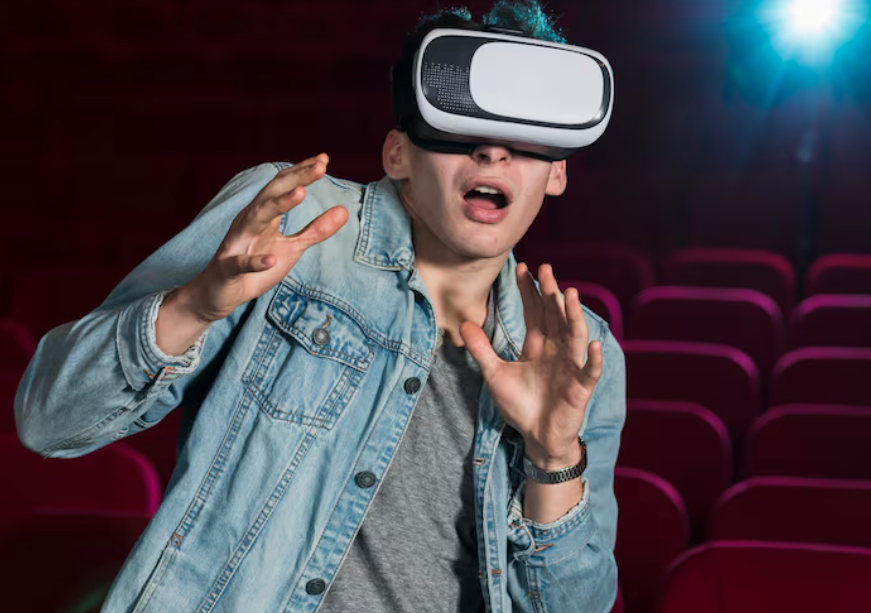
Virtual reality has become one of the most recognizable technologies associated with immersive entertainment.
VR systems use specialized headsets and interactive controls to place users inside computer-generated environments.
In gaming, virtual reality allows players to explore digital worlds, interact with objects, and participate in simulated activities from a first-person perspective.
Beyond gaming, VR experiences are increasingly explored in virtual concerts, educational exhibitions, interactive storytelling, and themed attractions.
For example, audiences can experience simulated historical environments or explore fictional worlds without physically traveling to those locations.
As VR hardware and software continue improving, developers are creating more detailed and responsive experiences.
However, accessibility, equipment costs, physical comfort, and content availability remain important factors influencing broader adoption.
2. Augmented Reality Is Expanding Interactive Possibilities
Augmented reality introduces digital content into the physical environment, creating experiences that combine real-world surroundings with computer-generated elements.
Unlike virtual reality, which typically replaces the user’s visual surroundings, AR enhances existing environments through smartphones, tablets, or specialized devices.
Entertainment companies use augmented reality to develop interactive games, promotional campaigns, museum exhibitions, and live-event experiences.
Visitors to an exhibition might point their smartphones at artwork to reveal animated illustrations or additional storytelling elements.
Similarly, interactive AR games encourage players to explore physical locations while engaging with digital characters and challenges.
The versatility of augmented reality makes it particularly attractive because many experiences can be accessed through devices consumers already own.
3. Interactive Storytelling Is Changing Audience Participation
Traditional storytelling usually follows a predetermined sequence in which viewers observe events without influencing the outcome.
Immersive storytelling introduces opportunities for audiences to make choices, explore alternative narratives, and interact with characters.
Interactive films, narrative video games, and digital exhibitions increasingly experiment with branching storylines.
In some experiences, participants make decisions that influence character relationships or determine how events unfold.
This approach encourages greater emotional investment because audiences become active contributors to the narrative.
Interactive storytelling also creates opportunities for repeat engagement, as participants may return to explore different outcomes.
For creators, these experiences require careful planning to ensure that audience choices remain meaningful and the overall story stays coherent.
4. Immersive Theater and Live Performances
Live entertainment is also embracing immersive formats that challenge conventional relationships between performers and audiences.
In traditional theater, viewers usually remain seated while watching actors perform on a designated stage.
Immersive theater may allow participants to move through different rooms, follow individual characters, and experience scenes from multiple perspectives.
Some productions incorporate interactive dialogue or invite audiences to participate in specific activities.
This creates a more personal connection between performers and attendees.
Immersive live performances can also combine lighting effects, sound design, physical environments, and digital projections to strengthen storytelling.
These experiences demonstrate how creativity and audience engagement can transform familiar entertainment formats without relying entirely on digital technology.
5. The Growing Appeal of Immersive Art Exhibitions
Art exhibitions have become another important area of immersive entertainment.
Traditional galleries primarily display paintings, sculptures, and installations for visitors to observe.
Immersive exhibitions often transform entire rooms into interactive artistic environments using large-scale projections, synchronized music, and dynamic lighting.
Visitors may walk through animated landscapes, experience moving visual compositions, or interact with responsive digital artwork.
These installations create opportunities for audiences to engage with artistic concepts through movement, sound, and visual exploration.
Immersive exhibitions can also introduce art to audiences who may not regularly visit traditional museums.
By combining artistic expression with accessible technology, creators are exploring new ways to communicate cultural and creative ideas.
6. How Immersive Gaming Is Transforming Player Experiences
Gaming has played a major role in advancing immersive entertainment technologies.
Modern video games increasingly feature detailed virtual environments, realistic sound effects, responsive controls, and complex narratives.
Technologies such as motion tracking, haptic feedback, and spatial audio can enhance the sensation of participating in a digital world.
Players may experience environmental changes, interact with virtual objects, or cooperate with others in shared digital environments.
Multiplayer experiences also introduce social dimensions, allowing participants to communicate and collaborate in real time.
Immersive gaming encourages exploration and experimentation, creating interactive entertainment experiences that extend beyond conventional screen-based activities.
As game development tools evolve, creators have greater opportunities to design increasingly sophisticated virtual worlds.
7. Immersive Experiences in Concerts and Music Events
Music entertainment is also exploring immersive formats to create more engaging audience experiences.
Concert organizers are incorporating projection mapping, synchronized lighting, interactive visuals, and spatial audio technologies into live performances.
These elements can transform concert venues into dynamic environments that respond to music and performance themes.
Virtual concerts offer another possibility, allowing audiences to attend digital performances through online platforms or virtual environments.
Some experiences include customizable avatars, interactive spaces, and opportunities for social participation.
Although virtual performances cannot fully reproduce every aspect of attending a physical concert, they provide alternative ways for audiences to connect with artists.
Immersive technologies are therefore expanding the creative possibilities of live and digital music entertainment.
8. The Role of Social Media in Immersive Entertainment
Social media platforms have contributed to the visibility and popularity of immersive experiences.
Visitors frequently share photographs and videos from interactive exhibitions, themed attractions, and visually impressive entertainment installations.
These posts can introduce experiences to wider audiences and encourage interest through personal recommendations.
Entertainment businesses increasingly consider visual presentation and audience participation when designing attractions.
However, successful immersive experiences require more than attractive environments suitable for photographs.
Meaningful storytelling, technical reliability, accessibility, and engaging interactions are essential for creating lasting audience satisfaction.
Social media can increase awareness, but the quality of the actual experience determines whether participants are likely to recommend or revisit an attraction.
9. Benefits of Immersive Entertainment for Audiences
Immersive entertainment offers several advantages that contribute to its growing appeal.
Greater Audience Engagement
Interactive environments encourage participants to become actively involved rather than simply observing content.
Memorable Experiences
Multisensory elements and personal participation can make entertainment experiences more distinctive and memorable.
Creative Exploration
Immersive environments allow audiences to explore imaginative worlds and experience artistic ideas from different perspectives.
Social Interaction
Group-based attractions, multiplayer games, and interactive exhibitions create opportunities for shared experiences.
Personalized Participation
Some immersive formats allow users to influence narratives or explore environments according to their interests.
These benefits help explain why immersive entertainment appeals to people seeking more interactive and engaging leisure activities.
10. Challenges Facing the Immersive Entertainment Industry
Despite its growing popularity, immersive entertainment faces several challenges.
Developing advanced experiences can require substantial investments in technology, specialized equipment, creative talent, and physical infrastructure.
Accessibility is another important consideration.
Some virtual reality experiences may cause motion sickness or discomfort, while certain installations can be difficult for individuals with sensory sensitivities or mobility limitations.
Technical failures may also disrupt interactive experiences and reduce audience satisfaction.
Entertainment providers must therefore consider user comfort, inclusive design, equipment maintenance, and appropriate safety measures.
Protecting personal information is equally important when immersive systems collect movement, behavioral, or other user data.
Addressing these challenges will help create more accessible and sustainable entertainment experiences.
11. The Future of Immersive Entertainment
The future of immersive entertainment will likely involve greater integration of digital technology, interactive storytelling, and personalized experiences.
Artificial intelligence may support more responsive virtual characters and environments that adapt to participant decisions.
Advancements in spatial computing, motion tracking, and display technologies could also improve the realism and flexibility of immersive applications.
Meanwhile, artists and entertainment companies may continue experimenting with hybrid formats that combine physical performances with digital environments.
However, technological sophistication alone will not determine success.
Audiences will continue valuing compelling stories, emotional connections, enjoyable interactions, and accessible experiences.
The most successful immersive entertainment concepts will likely combine technological innovation with strong creative direction.
Conclusion
The growing popularity of immersive experiences represents a significant shift in modern entertainment. Audiences are increasingly interested in participating actively in stories, performances, games, and artistic environments rather than remaining passive observers.
Virtual reality, augmented reality, interactive storytelling, immersive theater, and digital art installations are expanding the possibilities of entertainment across multiple industries.
Although challenges involving accessibility, costs, and technical reliability remain, immersive experiences offer exciting opportunities for creative expression and audience engagement.
As technology and storytelling continue evolving together, immersive entertainment is likely to play an increasingly important role in shaping how people experience culture, creativity, and digital interaction.
Ultimately, the future of entertainment is not only about what audiences watch or hear, but also about the worlds they can explore, the stories they can influence, and the experiences they can share.
Read more :Smart Budgeting Strategies for Managing Everyday Household Expenses
[…] Read more : The Growing Popularity of Immersive Experiences in Modern Entertainment […]
[…] Read More : The Growing Popularity of Immersive Experiences in Modern Entertainment […]